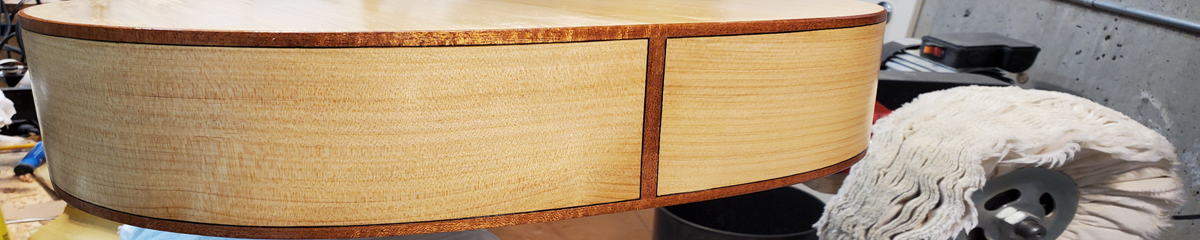
direct quote from woodcentral.com
Shellac can be applied by practically any method -- brushing, padding, or spraying. My favorite method is padding, which many woodworkers may not have heard of. This technique takes advantage of shellac's rapid drying and allows the finisher to apply a finish in a much shorter time than varnish, polyurethane or oil finishes. It works best on flat surfaces, and in a nutshell, here's how it's done. Use a 2 lb. cut shellac and some padding cloth, which is available from finishing suppliers as trace cloth or French polishing cloth. It should be as lint-free as possible. Do not use cotton T-shirt type cloth or cheesecloth.
Cut a piece of cloth roughly 10"-12" square. Fold it up into a pad so that there are no creases on the bottom. Pour about 1 ounce of alcohol on the cloth and work the alcohol into the cloth. Then take a squirt bottle of shellac and dispense approximately one ounce of shellac into the pad. Starting at the top of the board, bring the pad down on the surface like an airplane coming in for a landing, then lift it slowly off the board at the edge like taking off. Repeat this motion in stripes down the board. When you get to the bottom, the shellac that you put on the top will be dry enough to wipe again. Keep doing this until the surface is tacky and the pad starts to stick. Between wipes, pad the edges. The trick to this is to apply light coats of shellac by keeping the pad moist, not dripping wet. (If you can squeeze shellac from the pad it's too wet). When finished with padding, store the pad in a jar with a tight cap and re-use it. If this is the first application on new wood, the shellac should penetrate q uickly and be dry enough to scuff-sand with 320 stearated sandpaper to remove the raised fibers in about an hour. Repeat the same process as above until the pad starts to stick. Let this application dry overnight and then scuff sand with 320 grit stearated sandpaper and then steel wool with maroon synthetic steel wool or 000 regular steel-wool. Repeat the padding application one more time and let it dry overnight. Then rub the finish out with 0000 steel wool, using wax thinned with mineral spirits as a lubricant. After the wax dries to a haze, wipe the excess wax off with a soft cotton cloth. This leaves a very mellow, hand-rubbed satin finish. "
http://www.woodcentral.com/cgi-bin/read ... _173.shtml
Jeff Jewitt shellac method
-
Dave Bagwill
- Posts: 5993
- Joined: Tue Dec 13, 2011 7:44 pm
Jeff Jewitt shellac method
-Under permanent construction