Page 1 of 3

Steel wool and other hints

Posted: Sat Dec 24, 2011 4:30 pm
by Dave Bagwill
1. If you do use steel wool between coats - and it does work very well - do yourself a favor and purchase some of this stuff:

Liberon oil-free steel wool.

I had trouble with any finishing method I used when I used typical steel wool. I did a little research and found out that most wools have some oil added to them, and if left on the surface of the instrument, it can interact negatively with the Tru-Oil. It will drive you nuts.
And: so you've steel-wooled the surface, and you swipe with a paper towel. Now you have wool fibers in your towel. Don't use the towel to swipe again - you won't be swiping with the towel but with the stuff ON the towel. Gotta be a little obsessive.

2. A clean micro-fiber cloth - I get mine at the dollar store - wrapped in a flexible block and rubbed LIGHTLY, with the grain, on the dried oiled surface seems to even things out. I do this at any time because it's kinda fun and it helps with levelling somehow.

3. Wherever there is dark binding - around the soundhole especially - try very hard not to get sanding dust sanded into the top, or anywhere else for that matter. Once that dust is moistened for any reason, it makes a sludge that will make you want to whip yourself into a crying frenzy in front of a picture of Princess Diana. Or maybe that's just me. In any case, avoid that sludge like the...well, like anything to be avoided at all costs. :-)Really.
Re: Steel wool and other hints

Posted: Thu Jan 05, 2012 5:46 pm
by Ray Ussery
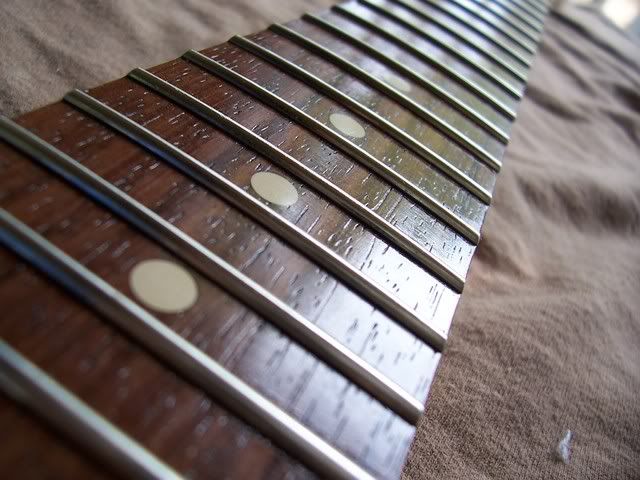
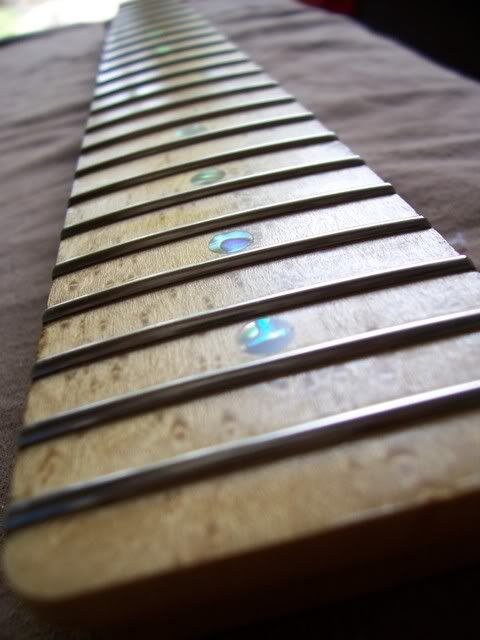
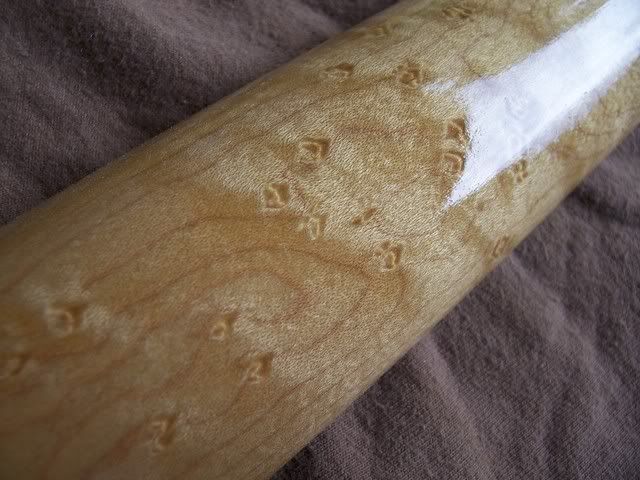
Amen to this. I have used a LOT of Tru-oil on electric necks. (Over 200) The majority of which where maple.
To each his own on application, and there is of course more than one way to do it and it does depend on the type of wood involved and what's easy for YOU!

I prefer to us the 3M imitation steel wool (White) if the individual wants a "Satin finish" because there are no tiny flecks of wool to remove from the finish, which can be a problem. And of course with an electric there are pickups to be considered that they will gather all of the wool they can.

http://multimedia.3m.com/mws/mediawebse ... 8008-8.PDF

I spray Tru-oil at a 2-1 mixture of mineral spirits 3 coats per day allowing a dry to the touch between coats and a 24 hour dry time between session and lightly level and sand with the white 3M or 1000 grit and then wipe CLEAN with a micro fiber cloth dampened with naphtha...(CAUTION naphtha will REMOVE all the Tru-oil if it had not fully cured) don't handle with bare hands as the oil in your fingers WILL stick to the finish and can be a problem with the next coat...then repeat for a finish of 12 coats (4 days)

Then I allow at least a week of cure time ( Depending in temp and humidity) and then depending on what I want or the customer wants, I do a finial rub out with 3M and then burnish with soft denim for a satin finish...OR I will sand up to 12000 micro mesh for a gloss finish following BOTH with a thin coat of Ren wax. It is NOT a real wax and contains no silicone's and used by the finest museums to protect everything from the face or priceless oil paintings to firearms.

http://www.restorationproduct.com/renwaxinfo.html

A 2.5 oz container will do 100 necks!

I apply my Tru-oil with a flattened and folded coffee filter and I use nitrite gloves, I also don't worry about the "First heavy coat" When I apply by hand all of my coats are as thin as possible, for ME it reduces drips and high spots and just seems easier and smoother.

I have never had a return or a failure...(Except the first one I did 3 years ago and nobody told me (Duh) about the OIL in steel wool!).

Good luck with Tru-oi, it's not a TRUE OIL finish but more of a wiping varnish but it's really hard to beat.
Also, try it on your necks, You won't be sorry, the "Feel" is fabulous!

One more tip...when opening the bottle. Poke a small hole in the foil seal with an ice pick or similar tool and leave the foil intact. Just tip up the bottle to wet your applicator then wipe of the top of the bottle CLEAN, restore cap each time and turn upside down when finished or when storing finish and it will not get a dry granular crust on the bottle which will come off and ruin you next application. This will greatly increase your shelf life of the product. :)

Ray :)

Image

Image

Image

Re: Steel wool and other hints

Posted: Thu Jan 05, 2012 5:57 pm
by Dave Bagwill
Great info Ray! Thanks for the post.
I did not know you had done electric guitars for so long. Do you still?

Re: Steel wool and other hints

Posted: Thu Jan 05, 2012 6:16 pm
by Ray Ussery
Yes Dave. Most of my work is related to the Telecaster design. It's what I grew up with. My Dad was a personal friend of Leo Fender and Leo gave him the 3rd Telecaster ever built with a August '51 neck and body date by the late Tadeo Gomez. I guess you could say it's in my blood. I have a LOT of treasured memories. :)

Ray :)

By the way, I have a spray booth design I would like to share with everyone and was wondering if this "Finishing" thread would be the proper place or should I use the "Special Tools" catagory?
Thanks Dave.

Ray :)

Re: Steel wool and other hints

Posted: Thu Jan 05, 2012 6:21 pm
by Dave Bagwill
I think as a new topic in the finishing forum. I look forward to it.

Re: Steel wool and other hints

Posted: Thu Jan 05, 2012 6:24 pm
by Ray Ussery
deadedith wrote:I think as a new topic in the finishing forum. I look forward to it.
Cool, then if Ken thinks it should be moved he can feel free to do so. I think it will benefit a LOT of folks.

Thanks,Ray :)

Re: Steel wool and other hints

Posted: Fri Jan 06, 2012 1:46 pm
by Ray Ussery
deadedith wrote:Great info Ray! Thanks for the post.
I did not know you had done electric guitars for so long. Do you still?
Dave, I re-read this post and need to clarify a bit, I haven't build 200 electrics, only finished and re-finished that many necks...I finished a neck for my son, who is a full time session musician in Texas, and is really hard on necks.
I did a TO and sent it to him, he's got over 3 years on it and it's only been touched up once in that time where as he was going through 2 a year working an average of 45 hours a week, Than speaks to the durability of TO...another musician saw the neck and wanted his done and so on...word to mouth I was pretty busy for a while...doing bass and guitar necks as well as a couple of mandolins and one 5 string banjo and two violins.
I had to kind of back out of it because of my health, I've been pretty sick for the last year and pretty much confined to bed for the last year with severe spinal problems...so I can't do much right now. I'm headed for 5 hours of spinal surgery soon and maybe I can get to walk again, then I can finish my shop and get busy once more. I miss it.
Anyway, didn't want to mislead you about my experience and I am a REAL newbie when it comes to acoustics although that's really where my interests lie now...it's maddening to not be able to work on the things I've planned. I can't wait! :) But I sure enjoy hanging around her if you guy's can put up with me...I don't have a lot to contribute but I'll sure try!

Many Thanks,
Ray :)